Moisture mapping, air sampling, and a written report the same visit

Basement Mold Inspection LAGUNA WOODS CA You Can Trust

A Basement Mold Inspection LAGUNA WOODS CA is a room-by-room moisture and mold evaluation of your below-grade space, and it is the fastest way to find out whether that musty smell is active growth or just stale air. We serve homeowners and property managers across Laguna Woods, California, including the condos and co-ops around Laguna Woods Village, with a cellar mold assessment LAGUNA WOODS that documents every reading before anyone quotes you a repair.

↗
Fast online booking

Request service today

Tell us what is happening. Our local team will confirm your visit shortly.

No spam. No obligation. Just practical help.
Thanks — we'll call shortly to confirm your visit.
Professional Basement Mold Inspection in LAGUNA WOODS
Careful work. Honest options.
About this service

What a Basement Mold Inspection LAGUNA WOODS CA Covers

A Basement Mold Inspection LAGUNA WOODS CA is a diagnostic service that measures moisture, humidity, and airborne spore counts in your below-grade space to determine whether mold is growing and where it started. We walk the entire footprint with a moisture meter and a thermal imaging camera, check the baseboards, wood framing, and fiberglass insulation for hidden saturation, and pull air samples when the visual read is inconclusive. You get readings, photos, and a clear yes-or-no answer, not a sales pitch.

Below-grade rooms in Laguna Woods stay damp for reasons that have nothing to do with visible leaks. Condensation on windows, crawl space moisture wicking up through the slab, and high indoor humidity trapped by closed doors all feed black mold growth behind drywall and under carpet. If you have been putting off a basement mold inspection after leak in LAGUNA WOODS, the cost of waiting is usually a larger tear-out. We also handle the smaller jobs, so an affordable basement mold inspection LAGUNA WOODS is one call away.

  • ✓ Find It Before You Smell It
  • ✓ Written Report for Insurance
  • ✓ Stop the Source, Not the Stain
  • ✓ Know the Scope Before You Commit

What's included

What's Included in the Inspection

Every inspection includes the diagnostic work and the written report. Remediation, if needed, is quoted separately after you have seen the findings, so you can decide with the facts in hand.

✓

Full Visual Walkthrough

We inspect every accessible surface in the basement, including baseboards, wood framing, insulation, and the wall-floor joint. Each area is photographed and logged, and we note any condensation on windows or pipes that could be feeding growth.

✓

Moisture and Thermal Readings

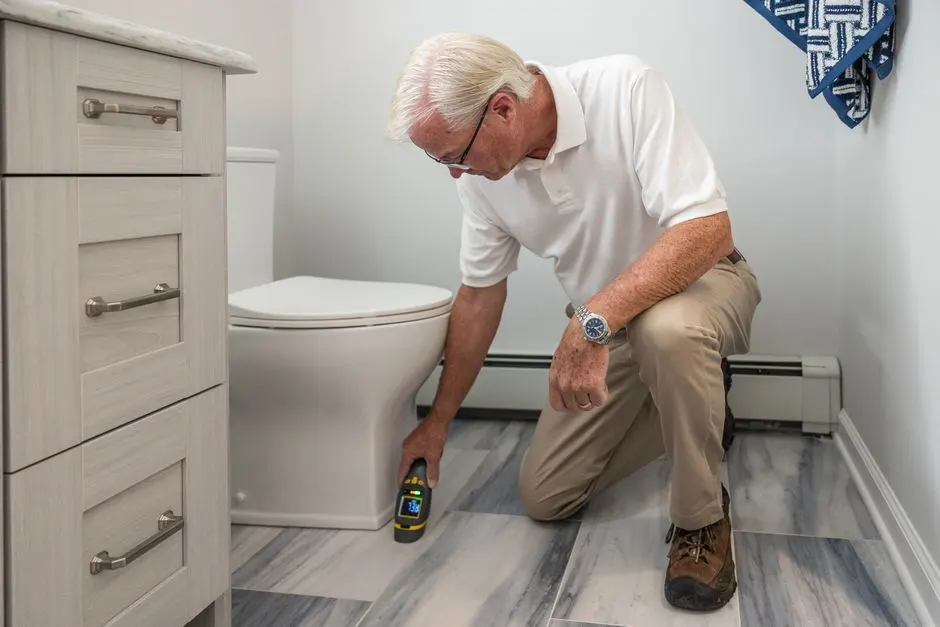
A moisture meter and thermal imaging camera map wet zones without cutting into the wall. Readings are recorded as percentages by location, so you can see how wet each area is and compare it to a dry reference point.

✓

Air and Surface Sampling

When the visual read is unclear, we run an air sampling pump and take a tape lift from suspect surfaces. Samples go to an accredited lab, and results come back in one to three business days with spore counts by genus.

✓

Written Report with Photos

You get a report that includes the floor sketch, moisture readings, photos, and lab data. It is formatted for insurance adjusters and real estate transactions, and we walk you through it page by page before we leave.

✓

Source Identification

The report names the likely moisture source, whether that is a failed sump, a slab crack, crawl space moisture, or humidity. Fixing the source is what keeps mold from returning, so we treat this as the most important part of the inspection.

How it works

How Our Inspection Process Works

01

Phone Intake

We ask about the smell, any past flooding, and whether the space is finished or bare concrete. That five-minute call tells us whether to bring the boroscope inspection camera and how many air sampling pumps to load. You get a two-hour arrival window, not a vague all-day promise.

02

Visual Walkthrough

Our technician walks the full basement with a moisture meter, checking baseboards, wood framing, and the wall-floor joint. We photograph every reading and note condensation on windows or pipes. This step takes 30 to 45 minutes in a typical Laguna Woods condo and longer in a detached home with a full footprint.

03

Moisture and Thermal Mapping

A thermal imaging camera reveals temperature differences that signal trapped moisture behind drywall, and the meter confirms it with a percentage reading. We map the results on a simple floor sketch so you can see exactly where the wet zones sit relative to your storage, laundry, or mechanical room.

04

Air and Surface Sampling

When the visual read is ambiguous, we run an air sampling pump for ten minutes per zone and take a tape lift from any suspect surface. Samples go to an accredited lab, and results come back in one to three business days with spore counts by genus, which is what separates a real mold problem from a stain.

05

Report and Walkthrough

We sit down with you and go through the findings page by page: what is growing, where the moisture is coming from, and what remediation would involve. You leave with a written report, photos, and lab data you can hand to an insurance adjuster or a contractor. No pressure and no same-day upsell.

Tools & methods

Tools and Methods We Use

Purpose-built equipment, used by trained technicians — so the job is done accurately the first time.

Moisture Meter

Reads moisture content as a percentage in drywall, wood framing, and concrete so we can compare wet zones to dry reference points.

Thermal Imaging Camera

Reveals temperature differences that signal trapped moisture behind drywall and under flooring without cutting the surface open.

Boroscope Inspection Camera

Looks inside wall cavities and under slabs through a small hole, which is how we confirm growth at the studs without demolition.

Air Sampling Pump

Draws a measured volume of air through a spore trap so the lab can report spore counts by genus for each zone.

HEPA Vacuum

Captures settled spores during inspection and cleanup so they are not redistributed into the air.

Negative Air Machine

Maintains negative pressure in a contained area so spores cannot escape into the rest of the home during remediation.

Dehumidifier

Pulls moisture out of the air after a leak or flood, bringing relative humidity back below the 60 percent threshold where mold grows.

Real results

Before and after.

Musty Storage Room in Laguna Woods Village

Before

A condo owner noticed a musty smell in a storage room that shared a wall with the crawl space. The wall looked dry, but a moisture meter read 28 percent at the baseboard and the thermal camera showed a cold band along the joint. Air sampling came back with elevated spore counts.

After

The inspection identified crawl space moisture as the source. After a vapor barrier and drainage correction, the wall dried to 11 percent and a clearance test showed spore counts back to outdoor baseline. The storage room is now usable without the smell.

Post-Leak Basement in Moulton Meadows

Before

A supply line failed under the slab and soaked the carpet and pad in a finished basement. The homeowner dried the surface with fans but did not pull the baseboards. Three weeks later, black mold growth appeared along the wall-floor joint and the smell reached the stairs.

After

The inspection mapped moisture at 31 percent in the drywall and confirmed growth with a boroscope. Remediation removed 12 linear feet of drywall, treated the framing, and re-tested clean in four days. The homeowner's insurance covered the work based on the inspection report.

Closed-Up Unit Near Gate 12

Before

A unit sat empty for five months with the windows closed. The new owner found condensation on the windows and a musty odor in the basement storage area. Relative humidity measured 68 percent, and mold had colonized the cool concrete wall.

After

The inspection confirmed surface growth on the concrete and recommended a dehumidifier sized for the cubic footage plus ventilation. After treatment and a month of controlled humidity at 50 percent, a clearance test came back clean.

Problems we solve

Basement Problems We Solve

Most basement mold calls start with one of these four problems. Each one has a fix, and the inspection tells us which fix applies to your building.

Ask a pro →
01

Musty odor with no visible mold

We use a thermal imaging camera and boroscope inspection camera to look inside the wall cavity without demolition, then confirm with air sampling. The report tells you exactly where the growth is and how far it has spread.

↗
02

Damp carpet or baseboards after rain

We measure moisture content at the baseboards and map the wet zone, then identify whether the water is coming from outside drainage, a slab crack, or condensation. The fix targets the entry point, not the stain.

↗
03

High humidity in a closed-up unit

We measure humidity and temperature at several points, then recommend ventilation and dehumidifier sizing based on the actual cubic footage. The inspection report includes the target humidity range to maintain.

↗
04

Mold after a plumbing leak or flood

We inspect the full footprint, not just the wet corner, and sample the air in adjacent rooms. The report scopes the contamination so remediation covers everything the water reached.

↗
Proof you can check

Licensed, Certified, and Insured

✓
IICRC AMRT (Applied Microbial Remediation Technician)Institute of Inspection, Cleaning and Restoration Certification
✓
IICRC WRT (Water Restoration Technician)Institute of Inspection, Cleaning and Restoration Certification
✓
EPA Lead-Safe CertifiedU.S. Environmental Protection Agency
✓
OSHA 10Occupational Safety and Health Administration
✓
California Contractors State License Board (CSLB)State of California
Good questions

Frequently Asked Questions

(833) 929-5837 →

Most inspections run $250 to $650 in 2026, depending on square footage and how many air samples we take. A single-room condo with one sample sits at the low end; a full detached-home basement with three sample zones and a boroscope look runs higher. The quote you get on the phone is the price you pay, and the written report is included.

The usual drivers are high indoor humidity, condensation on cool slab and pipe surfaces, crawl space moisture migrating upward, and slow leaks behind drywall that never show a puddle. In Laguna Woods, closed-up units and older plumbing fittings add to it. Once relative humidity stays above 60 percent for a few days, mold spores that are already present will colonize.

The order matters: fix the moisture source first, then remove the growth. That means correcting the leak or humidity problem, containing the area with plastic sheeting and negative air machine filtration, and removing porous materials that cannot be cleaned. Surface treatment with an antimicrobial solution follows, then post-remediation mold testing confirms the spore count is back to normal.

Our crew covers all of Laguna Woods and the surrounding Orange County area, including the ZIP codes 92637 and 92654. We are a licensed and insured local company, and we can usually schedule an inspection within 24 hours. Call (833) 929-5837 and we will give you a two-hour arrival window.

Ready when you are

Schedule Your Basement Mold Inspection LAGUNA WOODS CA

We are licensed, insured, and IICRC certified, and we can usually get a technician to your door within 24 hours. Call (833) 929-5837 and we will give you a two-hour arrival window and a firm price before we start.

Book Inspection (833) 929-5837 →
Request an appointment

Contact Our Laguna Woods Team

Call (833) 929-5837 or email us and we will get back to you the same business day. We answer emergency calls 24/7, and weekday inspections can often be scheduled the same day. Tell us what you are seeing or smelling and we will tell you what the next step looks like.

Request received — our team will be in touch shortly.
Tap to call(833) 929-5837